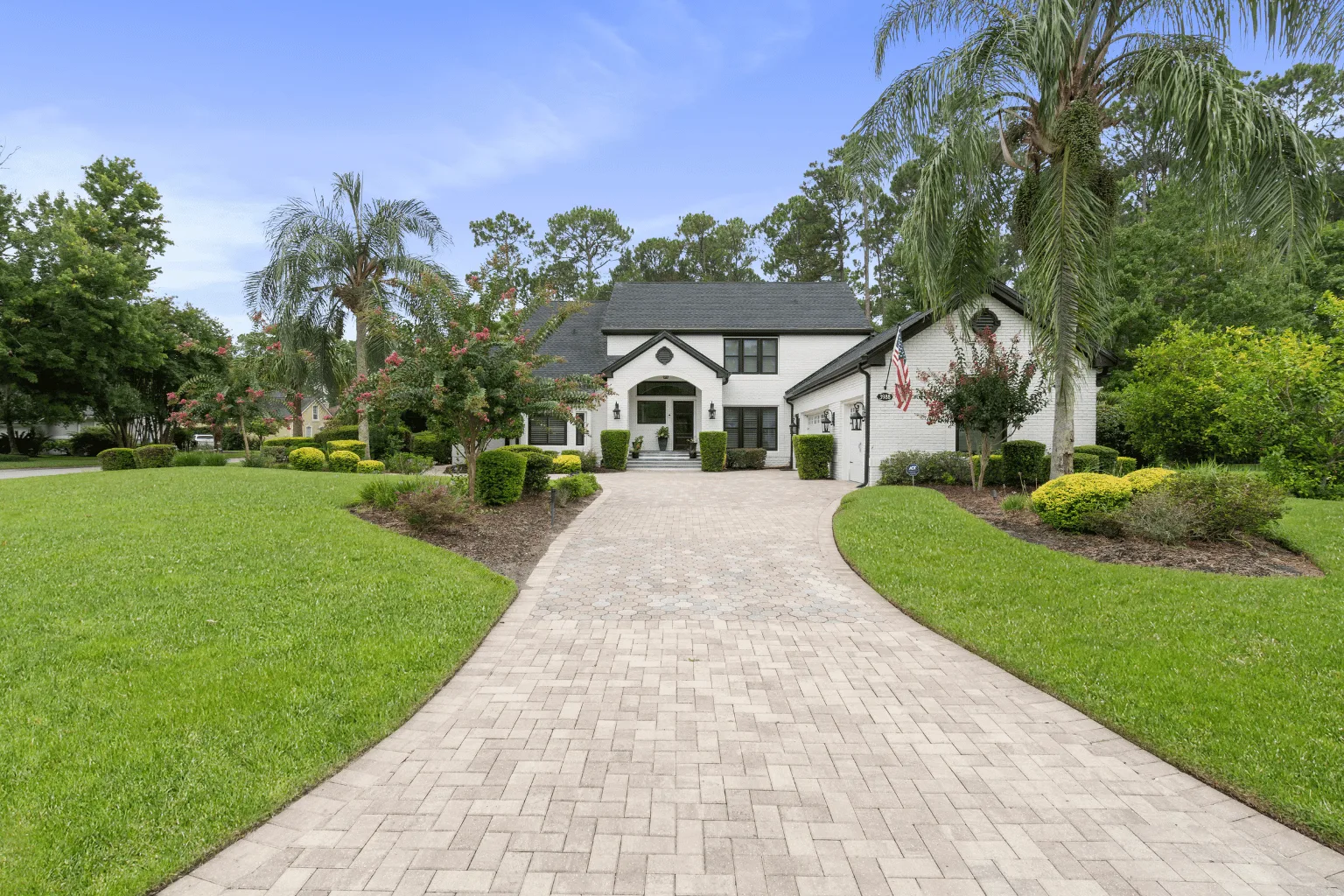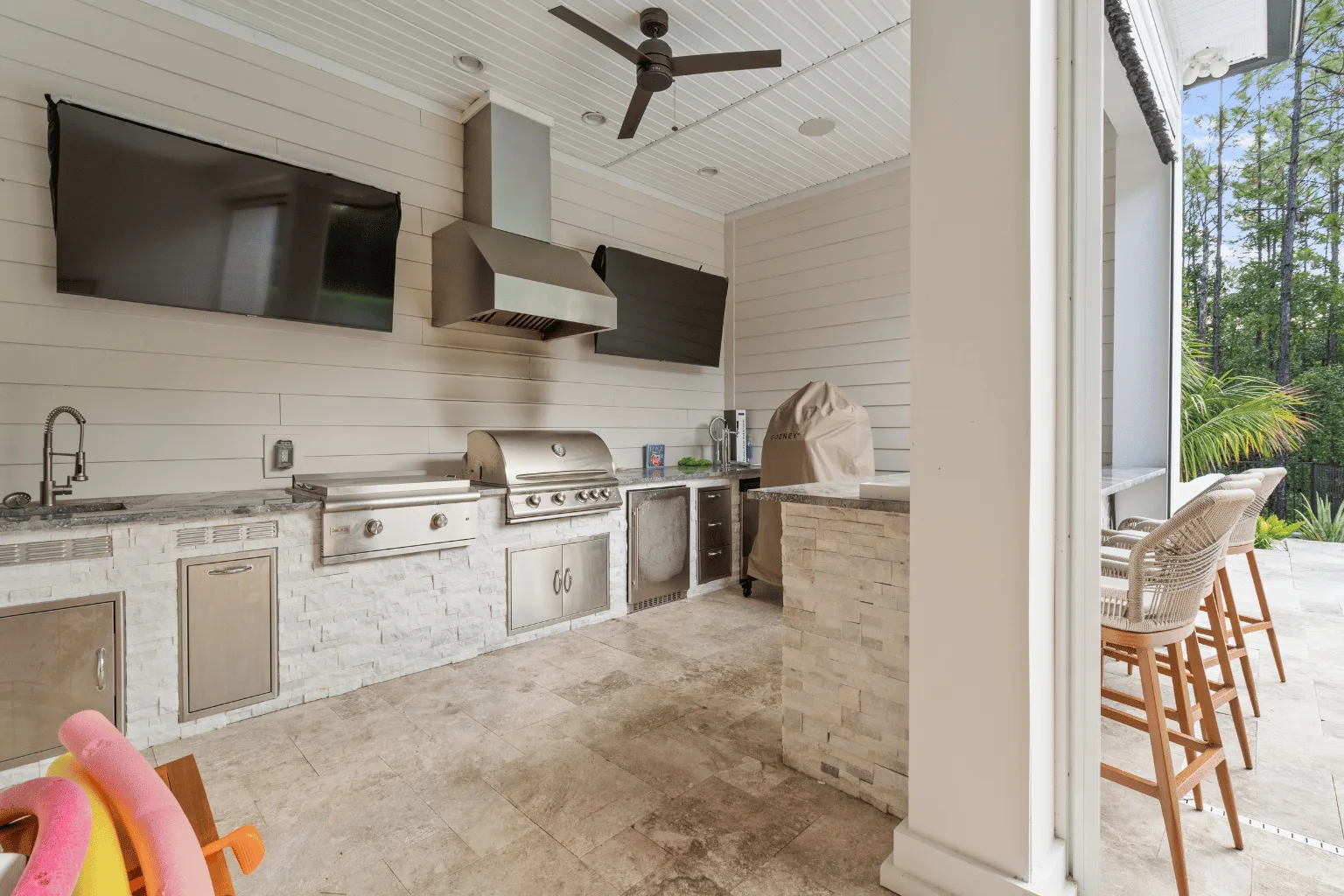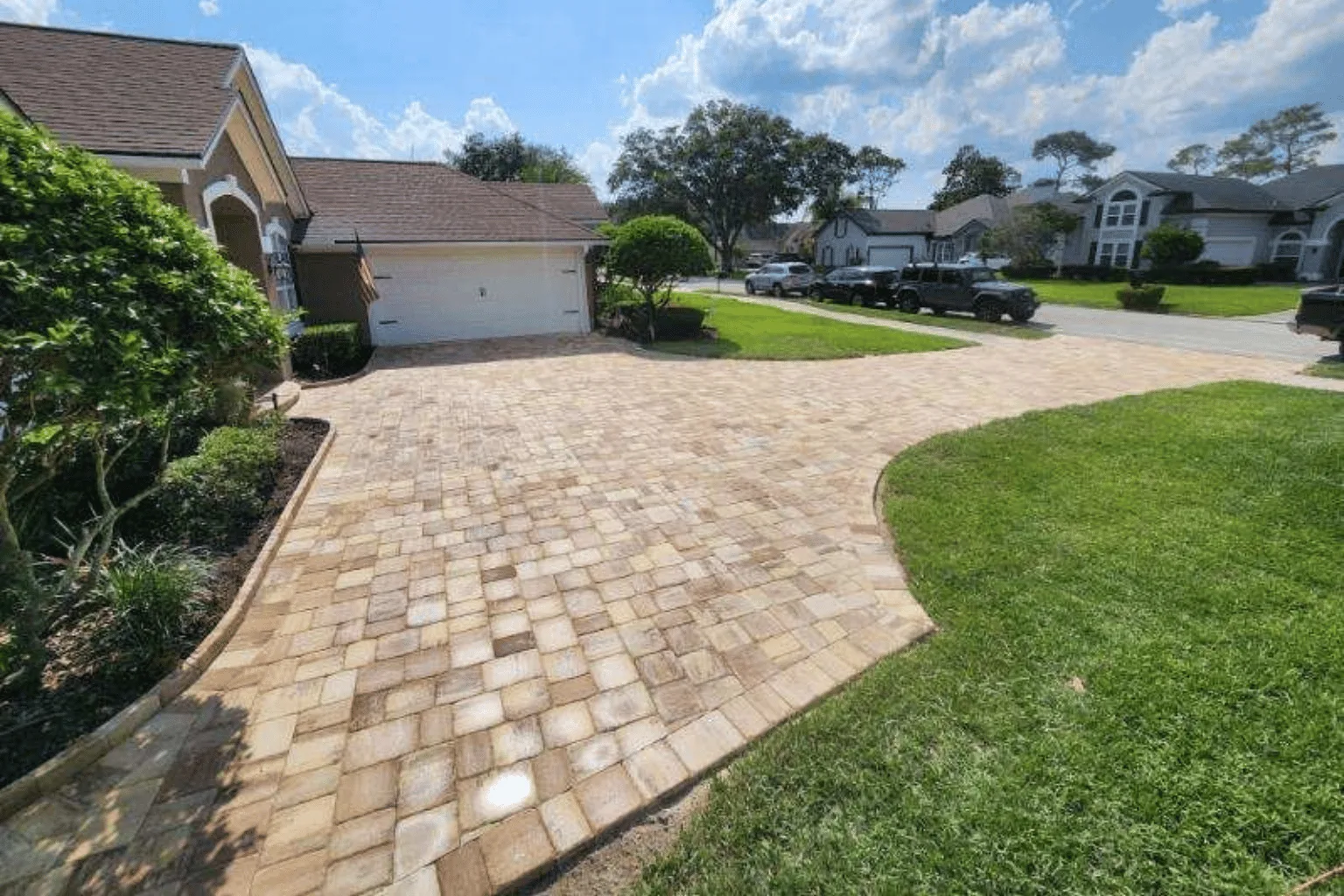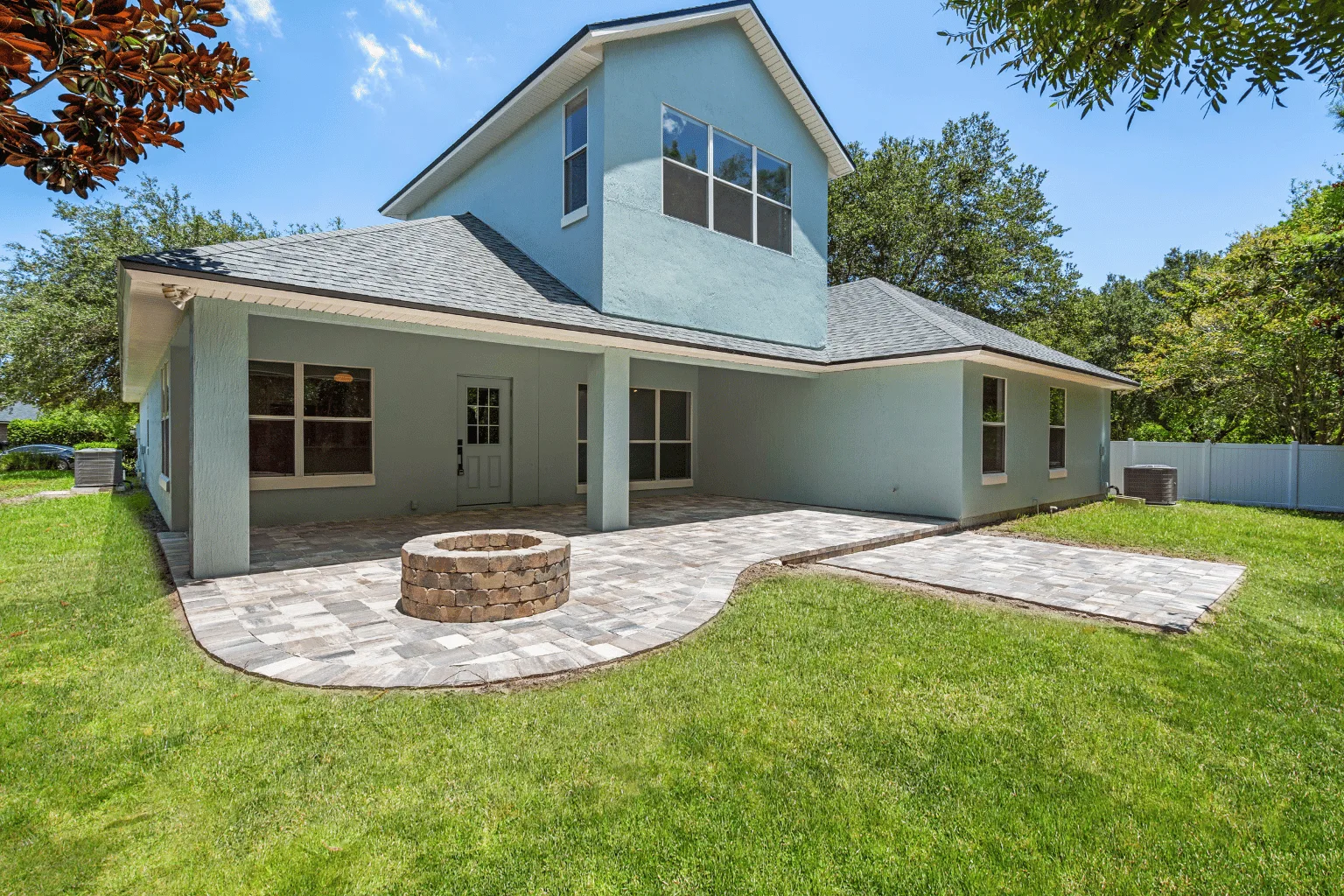
One of the best things about pavers is how little they ask of you. A well-built paver patio, driveway, or pool deck in Jacksonville can look new for decades — but “low maintenance” isn't the same as “no maintenance.” Northeast Florida's heat, humidity, afternoon storms, and sandy soil all work on hardscaping year-round. This guide walks through a simple, realistic plan to keep your pavers looking sharp from Mandarin to Ponte Vedra Beach.
Routine Cleaning
Most paver upkeep is just basic cleaning. Sweep loose debris — leaves, grass clippings, oak pollen — off the surface regularly, especially in spring when Jacksonville's tree canopy sheds everything at once. Organic debris left sitting on damp pavers is what feeds mildew and algae, so a broom is your first line of defense.
A garden-hose rinse handles everyday dust and dirt. For a deeper clean, a pressure washer is fine occasionally and gently — keep the pressure moderate, use a wide fan tip, and hold the wand back from the surface. Aggressive pressure washing blasts the joint sand out from between your pavers, which creates more work than it solves. A mild soap and a stiff brush will lift most stains without ever touching a pressure washer.
Polymeric Joint Sand
The sand packed between your pavers isn't an afterthought — it's structural. Polymeric joint sand hardens when activated with water, locking pavers together, blocking weed growth, and keeping ants and other insects from tunneling up through the joints. On a quality install, it does its job quietly for years.
Over time, though, joint sand can erode — usually from heavy rain runoff, over-aggressive pressure washing, or simple age. Signs it needs attention: visibly low or empty joints, sand washing out after storms, wobbly individual pavers, or weeds and ants suddenly appearing. Topping off the joints with fresh polymeric sand is an easy, affordable fix and one of the highest-value maintenance steps you can take for a paver driveway or patio.
Sealing Your Pavers
Sealing is optional, but in Jacksonville's climate it pays off. A quality sealer protects pavers from UV fading, repels oil and stains, helps lock joint sand in place, and makes routine cleaning easier. It also deepens the color of the stone — many homeowners seal as much for the richer look as for the protection.
Plan to reseal roughly every two to three years. Heavy sun exposure, like an unshaded pool deck in Nocatee, may shorten that interval; a shaded patio may stretch it. Always reseal onto a clean, fully dry surface — sealing in trapped moisture causes hazing. If you're unsure about timing or product, we're happy to advise.
Weed and Ant Control
Healthy polymeric joints prevent most weeds and ants on their own. When you do see growth, pull weeds early before roots establish, and avoid harsh chemical herbicides that can discolor pavers. For ants pushing sand up through the joints, a targeted ant treatment plus a joint-sand top-off usually solves it. If weeds and ants keep returning, that's a strong signal your joint sand is due for replacement.
Replacing an Individual Paver
Here's the quiet advantage pavers hold over poured concrete: if one gets cracked, deeply stained, or chipped, you replace just that one piece. The damaged paver lifts out, the base underneath gets leveled, a matching paver drops in, and the joints get re-sanded. No tearing out a slab, no mismatched patch. Holding onto a few spare pavers from your original install makes this even simpler down the road.
Florida-Specific Stains: Rust, Efflorescence & Organic Growth
Efflorescence
That whitish, chalky haze on new pavers is efflorescence — natural salts migrating to the surface as the pavers cure. It's harmless and usually fades on its own within the first year. A dedicated efflorescence cleaner speeds it along if you'd rather not wait.
Rust stains
Rust usually comes from metal furniture, irrigation water with high iron content, or fertilizer overspray — all common in Jacksonville yards. Treat rust early with a cleaner formulated specifically for it; standard soap won't touch it.
Mildew, algae & organic growth
Our humidity makes organic growth the most common paver complaint in Northeast Florida — especially on shaded, north-facing, or pool-adjacent surfaces. A mild cleaning solution and a stiff brush handle it, and keeping the surface swept and sealed slows it from coming back.
Season-by-Season Checklist
- Spring: Sweep up pollen and tree debris, inspect joints after the rainy stretch begins, and pull any early weeds.
- Summer:Rinse regularly, watch shaded areas for algae in the humidity, and check that storm runoff isn't washing out joint sand.
- Fall: Clear fallen leaves before they stain, top off any low joints, and treat lingering organic growth.
- Winter: The ideal window for a deeper clean and resealing — cooler, drier weather lets sealer cure properly.
Need Help With Your Pavers?
Whether you need joint sand restored, a professional reseal, individual pavers replaced, or you're planning a brand-new paver patio, Jax Pavers can help. We're licensed and insured, we stand behind every install, and our project work starts at a $7,500 minimum. Call (904) 445-1261 for a free consultation anywhere in the Jacksonville area.